
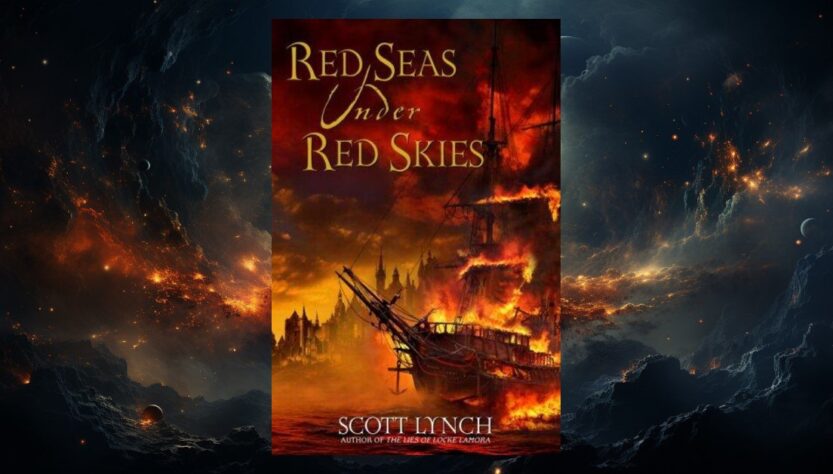
Every fantasy fan knows the second book curse. Your debut lands like a thunderbolt, readers fall in love with your characters, and then you have to do it all again without the element of surprise. When I reviewed The Lies of Locke Lamora, I gave it a full five stars for its razor-sharp dialogue, its gutting emotional beats, and its sheer confidence in throwing two timelines at you and making both compelling. Red Seas Under Red Skies doesn’t quite reach those heights, but it tries something genuinely ambitious, and for the most part it pulls it off.
Two Books in One
The structure here is fascinating and, depending on your patience, either brilliant or frustrating. Lynch essentially writes two novels and welds them together. The first half is a long-con casino heist in the coastal city of Tal Verrar, with Locke and Jean running an elaborate scheme against the Sinspire, a gambling house with security that would make a paranoid dictator jealous. It’s classic Gentleman Bastard territory, all verbal sparring and increasingly ridiculous layers of deception.
Then the book pivots. Hard. Locke and Jean end up press-ganged into piracy by the Archon of Tal Verrar, and suddenly you’re reading a nautical adventure where two men who have never set foot on a ship are trying to convince hardened sailors they know what they’re doing. It’s like watching someone blag their way through a job interview for a position they’re wildly unqualified for, except the interviewers carry cutlasses.
Having since finished the entire published trilogy, I can see how this book sits as the bridge instalment. It expands the world beyond Camorr, tests the Locke and Jean relationship in new ways, and sets up threads that pay off later. But it does ask you to essentially restart your investment halfway through, and that pivot is where some readers will wobble.
Locke and Jean, the Real Romance
The heart of this book, and honestly the heart of the whole series, is the friendship between Locke and Jean. Lynch writes male friendship with a depth and vulnerability that fantasy rarely manages. There’s a sequence early on involving poison and trust that genuinely had me questioning whether either of them would make it, and the emotional stakes feel earned because these two have been through enough already. Their bickering is funnier than most comedy novels manage on purpose, and their loyalty to each other is the kind of thing that makes you want to text your best friend.
Jean’s relationship with Ezri is another highlight. It’s tender without being saccharine, and it gives Jean a life outside of being Locke’s muscle. Lynch lets it breathe, which makes everything that follows land harder.
Where It Wobbles
The piracy section, while genuinely entertaining once it finds its rhythm, takes a while to get there. The naval terminology and crew dynamics slow things down, and there’s a stretch in the middle where the pacing sags under the weight of rigging and watches and learning which end of a ship is which. Lynch clearly did his research, perhaps a touch too thoroughly.
The villains here also lack the menacing presence of the Grey King from the first book. Requin and Stragos are competent antagonists, but they feel more like obstacles than threats. You never get that same sense of genuine dread that made Locke Lamora’s antagonist so effective.
The ending also feels slightly rushed after such a long build-up. Multiple plot threads converge quickly, and while the emotional payoff is solid, the mechanical resolution of the heist feels less elegant than the first book’s clockwork precision.
Who Should Read This
If you loved The Lies of Locke Lamora, this is still absolutely worth your time. The writing remains sharp, the world-building expands in interesting directions, and the character work is arguably even richer than the first book. Lynch is clearly a writer who cares deeply about his characters, and it shows in every scene Locke and Jean share.
If you’re coming in cold, start with The Lies of Locke Lamora. You’ll get far more out of this book if you already care about these two ridiculous, clever, catastrophically unlucky con men. Red Seas Under Red Skies is very much a continuation rather than a standalone.
As a bridge novel in a trilogy, it does what it needs to do: it deepens the world, tests the characters in new ways, and leaves you with plenty to think about. It’s not the thunderbolt the first book was, but four stars out of five is still excellent company.
Rating: 4/5
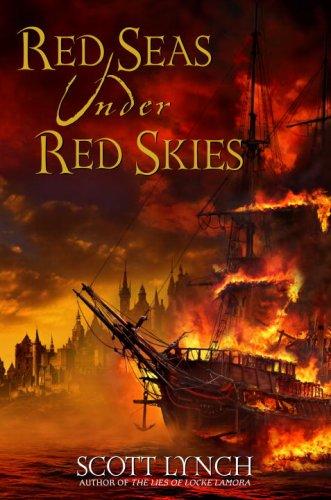
The Audible UK edition is narrated by Michael Page and runs to 25 hours and 56 minutes.
Discover more from Unfolded Universe: Sci-Fi Book Reviews
Subscribe to get the latest posts sent to your email.